November 24, 2026
Skin Tag Removal in St Helens and What Treatment Involves

Removal starts with identifying the growth, not choosing a technique. If you’re looking for a skin tag removal doctor in St Helens, understanding what an assessment and treatment may involve can help you decide what to do next.
A skin tag can catch on clothing or become irritated, so wanting it removed is understandable. Skin tags aren’t contagious and don’t usually pose a health risk. However, a growth that becomes painful, changes colour, bleeds or grows rapidly should be assessed by a medical professional.
This guide explains the treatment process, how healing and aftercare work, what can affect the cost and what to know about payment options. You’ll also learn how skin tags differ from other benign (non-cancerous) skin lesions. After treatment, a skin tag may darken and dry out before falling away in the days that follow. Understanding these steps can help you feel prepared and know when to seek an assessment.
Key Takeaways
- Learn what a clinician considers when assessing a skin growth and deciding whether removal may be suitable.
- Understand the usual changes during healing and how to approach aftercare.
- Explore how skin tags differ from other benign (not cancerous) lesions and which changes warrant medical assessment.
- Find out what to consider when choosing a local clinic, including treatment details, costs and payment options.
Table of Contents
- What is skin tag removal?
- Aftercare and healing
- Skin tags and other benign (not cancerous) lesions
- Which doctors or clinics in St Helens remove skin tags?
- Ready Health: Procedures & Treatments Vitamin B12 Injections, Joint Injections, Ear Wax Extraction, Skin Lesion Removal, Hayfever Treatments, Weight Loss Injections (Mounjaro/Wegovy/Semaglutide)
What is skin tag removal?
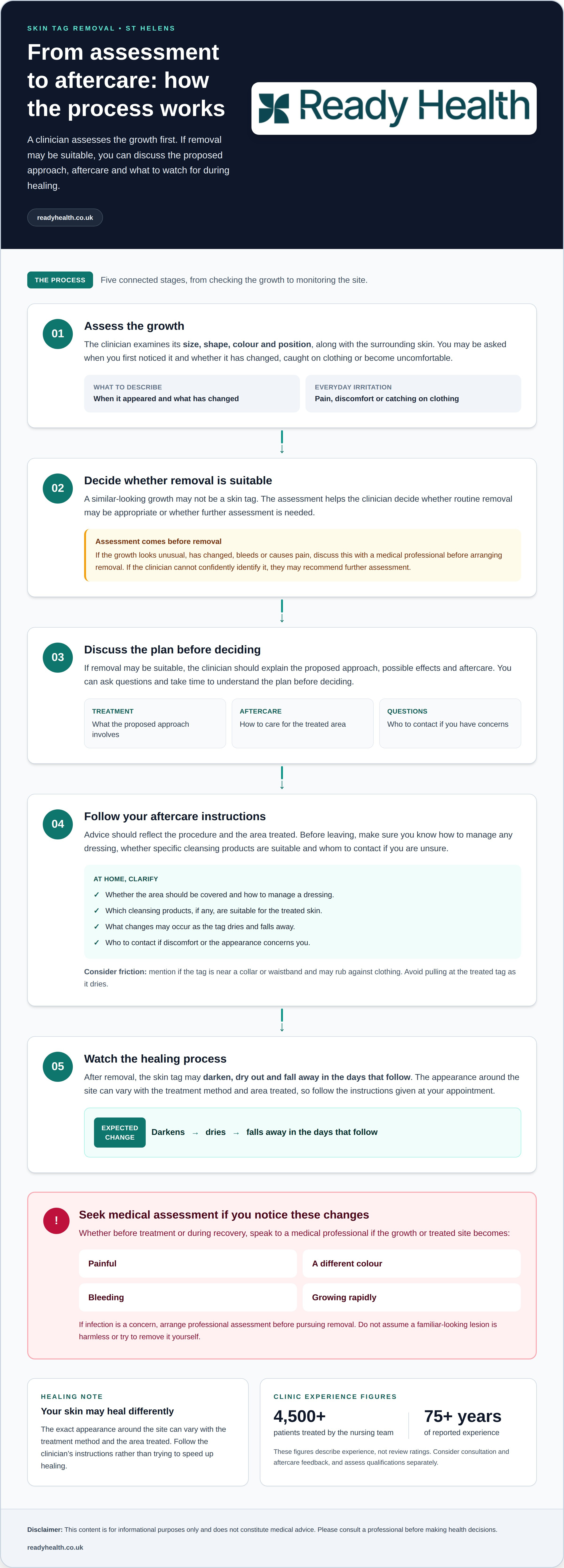
Skin tag removal begins with a consultation and assessment of the lesion. The clinician examines its size, shape, colour and position, as well as the surrounding skin. They’ll ask when you first noticed it and whether it has changed, caught on clothing or become uncomfortable. This information helps distinguish a typical skin tag from a growth that needs further assessment.
Before treatment, the clinician discusses whether removal is suitable and explains the proposed approach. Your treatment plan should cover the procedure, possible effects, aftercare and what to do if you have concerns during healing. Ask questions before deciding. If the growth looks unusual, has changed, bleeds or causes pain, assessment should come before arranging removal.
Local experience figures offer one point of comparison: a St Helens clinic reports its nursing team has treated over 4,500 patients and has more than 75 years of experience. Those figures describe experience, not review ratings. When reading reviews, consider whether they discuss the consultation and aftercare; assess qualifications separately by looking at the practitioner’s stated clinical role and relevant training.
A consultant plastic surgeon may be appropriate if a growth needs a surgical opinion. The right clinician depends on the lesion and the assessment required. If you’re in Merseyside, a consultation in St Helens gives you an opportunity to describe the growth and discuss its location, changes and any concerns before treatment is planned.
For example, mention if a lesion near your collar catches on a necklace or becomes irritated. A focused consultation can clarify whether removal is appropriate, what it involves and how to care for the area afterwards. You should understand the proposed treatment and aftercare without feeling pressured to proceed. If the lesion raises concern, the clinician can advise on the appropriate next step rather than treating it as a routine skin tag.
Aftercare and healing
After removal, the treated skin tag may darken, dry out and fall off in the days that follow. These changes may occur during the healing process described by a St Helens clinic. The exact appearance around the site can vary with the treatment method and the area treated. Follow the aftercare instructions given at your appointment, since these should reflect the procedure and your skin.
Before leaving the clinic, make sure you understand how to care for the treated area. Ask what to do if a dressing is used, whether the site needs specific cleaning and when you can resume normal activities. If you’re unsure about a step at home, contact the treating clinician for guidance rather than guessing or applying a product or therapy.
- Clarify whether the area should be covered and how to manage any dressing.
- Ask which cleansing products, if any, are suitable for the treated skin.
- Find out what changes may occur as the tag dries and falls away.
- Confirm whom to contact if discomfort or the appearance concerns you.
A tag on the neck, for instance, may rub against a collar, while one on the waist may catch on clothing. Mention this at your appointment so your aftercare advice can account for everyday friction and comfort. Avoid pulling at the treated tag as it dries. Follow the clinician’s instructions rather than trying to speed up healing.
Keep an eye on the treated site as it heals. If it becomes painful, changes colour, bleeds or grows rapidly, seek assessment from a medical professional. These changes need attention whether they occur before treatment or during recovery. Clear aftercare guidance can help you recognise the expected drying and falling-away process and understand when a concern needs review.
Skin tags and other benign lesions
Skin tags aren’t contagious and don’t usually pose a health risk. However, another type of lesion may look similar, so appearance alone can’t confirm what a growth is. A clinician can assess its shape, colour, position and history before discussing removal. This matters because treatment intended for a skin tag may not be appropriate for every mole or skin growth.
At Fairfield Independent Hospital in St Helens, guidance advises medical assessment if a skin tag becomes painful, changes colour, bleeds or grows rapidly. These changes are reasons to seek assessment, not to select a removal method yourself. If you think a lesion is infected, arrange professional assessment before pursuing removal. A clinician can consider the concern and advise on the next step.
Moles and other lesions can raise similar concerns, especially if they change or repeatedly catch on clothing. A specialist assessment helps determine whether a growth appears suitable for routine removal or needs further investigation. If the clinician cannot confidently identify it, they may recommend further assessment instead of treating it as a skin tag. This is an important distinction between treatment and diagnosis.
A benign lesion is not cancerous. A plastic surgeon may be relevant when a lesion needs surgical expertise, but the right specialist depends on its appearance and clinical assessment. A hospital setting may also be appropriate for particular concerns. At your appointment, describe when you first noticed the growth, what has changed and whether it has caused pain or bleeding. These details help the clinician assess the lesion rather than relying on a label you’ve given it.
Seek assessment for a growth that is painful, bleeding, changing colour or growing rapidly. Don’t try to remove it yourself or assume a familiar-looking lesion is harmless. For example, a small raised growth that starts bleeding should be assessed before you consider removal. If infection is a concern, tell the clinician. An examination can help determine whether treatment or further investigation is appropriate.
Which doctors or clinics in St Helens remove skin tags?
St Helens has clinics offering skin tag removal, including specialists who provide face-to-face consultations. A doctor offering skin tag removal in St Helens can assess the growth and discuss whether treatment is suitable. The initial consultation gives you time to describe changes, discomfort or irritation and understand the next step.
Both listed local specialists provide face-to-face first and follow-up consultations. Appointments are subject to confirmation, so the booking process includes confirming the appointment before attending. One St Helens clinic lists weekday opening hours as 9:00 to 17:00, Saturday hours as 9:00 to 13:00, and closure on Sunday. These details help you consider practical access when arranging a visit.
Payment arrangements may also shape your choice. Both listed specialists show Bupa as an accepted payment method. This does not establish what your policy covers, so review your own cover and any applicable terms before relying on insurance for treatment.
- Choose a face-to-face consultation if you want an in-person assessment.
- Confirm your appointment before travelling to the clinic.
- Consider weekday or Saturday opening hours when planning your visit.
- Review your Bupa policy if you intend to use that payment method.
During the consultation, ask what the assessment includes, how the treatment plan is decided and what aftercare guidance you’ll receive. A clear explanation helps you understand the proposed care before deciding whether to proceed. If a lesion is painful, bleeding, changing colour or growing quickly, prioritise medical assessment rather than booking routine removal.
Local options can differ in opening times, consultation arrangements and payment methods. Consider these practical details alongside the clinician’s explanation of your lesion. If your main concern is a changing growth, mention this when arranging an appointment so the consultation can focus on assessment and the appropriate next step.
Ready Health: Procedures & Treatments Vitamin B12 Injections, Joint Injections, Ear Wax Extraction, Skin Lesion Removal, Hayfever Treatments, Weight Loss Injections (Mounjaro/Wegovy/Semaglutide)
Ready Health offers skin lesion removal for people seeking assessment and treatment for a skin growth. If you’re unsure whether a lesion is a skin tag or needs further medical assessment, a private GP consultation can help you discuss your concern and understand the next step. Removal isn’t right for every changing or unusual growth, so begin with an assessment.
During a consultation, describe any changes in the lesion, including bleeding, pain or a change in colour. This helps guide the discussion about whether removal may be suitable or further assessment is needed. You can also ask about the treatment process and aftercare before deciding.
If you’d like to discuss a skin concern, contact Ready Health to arrange a consultation.
Choose a clear next step for your skin concern
Deciding what to do can start with a simple conversation about your priorities. You might want to discuss a growth that catches on clothing, understand whether removal is appropriate, or clarify what to expect before making a decision. A private GP consultation can provide space to raise these concerns, with 15-minute and 30-minute appointments available.
If you’re considering a doctor for skin tag removal in St Helens, start by getting the lesion assessed and understanding your options. Ready Health offers skin lesion removal, and a consultation can help you discuss your concern and the appropriate next step. Ask about practical details that matter to you, such as aftercare and how the proposed approach fits your needs.
Ready Health also provides healthcare services such as the Well Woman Blood Profile. The right appointment depends on why you’re seeking care. Take the next step at your own pace and bring any questions that will help you make an informed decision.
Contact Ready Health to discuss treatment and decide how you’d like to proceed.
Frequently Asked Questions
What causes skin tags?
Skin tags often appear where skin rubs against skin or clothing, such as the neck or underarms, though the precise cause isn’t always clear. Their presence alone doesn’t indicate a wider health problem. If a growth changes, bleeds or becomes painful, don’t assume it’s a skin tag. Arrange a clinical assessment before seeking removal so the lesion can be identified appropriately.
Does it hurt?
How treatment feels depends on the technique and the area being treated. Before proceeding, ask which method is planned, whether numbing is used and what sensations you might notice during or after treatment. A sensitive or frequently rubbed area may affect your comfort. Tell the clinician about concerns about pain or previous reactions to procedures before deciding whether to proceed.
What happens afterwards?
After treatment, note the date and exact site treated. This can help you describe the procedure accurately if you later discuss the area with a clinician. If more than one growth is treated, record each location separately. Keep any written treatment information together so you can refer to it if questions arise.
Will it leave a mark?
A mark cannot be ruled out, and the final appearance depends on the treatment method, the site and how your skin heals. Ask the clinician what to expect for the specific area before deciding. For example, a visible site on your neck may matter more to you than one usually covered by clothing. If you are also interested in broader aesthetic care or therapies to improve skin tone and texture once healed, Cosmetic Facial offers insight into advanced skin treatments and rejuvenation.
What skin tag removal methods are offered by St Helens clinics?
Removal techniques vary between clinics, and the suitable approach depends on the clinician’s assessment of the growth and its location. Ask which method is proposed, why it suits your case and what aftercare it involves. The consultation should establish whether the lesion appears suitable for removal or needs assessment first. Don’t choose a technique based on appearance alone.
How much does private skin tag removal cost in St Helens?
Private skin tag removal costs depend on the individual case, with a price provided after a quote request. The cost may be affected by the number and size of lesions, their location, the assessment required and the proposed treatment. Before agreeing, ask what the quote covers, including whether consultation and treatment are charged separately. There isn’t one price for every case.
This content is for informational purposes only and does not constitute medical advice. Consult a qualified healthcare professional before making decisions about your health.

Article by
Shamir Patel
Shamir Patel is a UK-based Clinical Pharmacist and Independent Prescriber with a specialist focus on ADHD and weight management.
He is the Registered CQC Manager at Ready Health Medical Clinic, where he leads the development and delivery of safe, patient-centred services across ADHD assessment and treatment, weight loss programmes, and general medical care.
With a career spanning nearly three decades since qualifying in 1995, Shamir brings extensive clinical and operational experience across both community pharmacy and private healthcare.
He also serves as Deputy Superintendent Pharmacist and Lead Prescriber at PillSorted. He oversees high-volume prescribing services. He focuses on GLP-1 weight loss treatments and clinical governance.
Shamir is a SCOPE-accredited obesity specialist and has a strong interest in improving access to evidence-based ADHD care. He is known for his structured, guideline-driven approach, aligning his clinical practice with NICE recommendations and regulatory standards set by the GPhC and CQC.
Alongside his clinical work, Shamir is actively involved in mentoring prescribing pharmacists, developing standard operating procedures, and contributing to service innovation within digital and community healthcare settings. His work reflects a commitment to safe prescribing, patient education, and improving outcomes through practical, accessible care.
Disclaimer
The information on this website is provided for general educational and informational purposes only and is not intended as medical advice, diagnosis, or treatment. Articles reflect general guidance and may not be suitable for your individual circumstances. You should always seek advice from a qualified healthcare professional before starting, stopping, or changing any treatment, medication, or healthcare plan. While we aim to keep our content accurate and up to date, Ready Health makes no guarantees about the completeness, accuracy, or suitability of the information provided. Reliance on any information on this site is entirely at your own risk. If you have concerns about your health, please book an appointment with a suitably qualified clinician. In an emergency, contact 999 or attend your nearest A&E department.
Frequently asked questions
What causes skin tags?
Skin tags often appear where skin rubs against skin or clothing, such as the neck or underarms, though the precise cause isn’t always clear. Their presence alone doesn’t indicate a wider health problem. If a growth changes, bleeds or becomes painful, don’t assume it’s a skin tag. Arrange a clinical assessment before seeking removal so the lesion can be identified appropriately.
Does it hurt?
How treatment feels depends on the technique and the area being treated. Before proceeding, ask which method is planned, whether numbing is used and what sensations you might notice during or after treatment. A sensitive or frequently rubbed area may affect your comfort. Tell the clinician about concerns about pain or previous reactions to procedures before deciding whether to proceed.
What happens afterwards?
After treatment, note the date and exact site treated. This can help you describe the procedure accurately if you later discuss the area with a clinician. If more than one growth is treated, record each location separately. Keep any written treatment information together so you can refer to it if questions arise.
Will it leave a mark?
A mark cannot be ruled out, and the final appearance depends on the treatment method, the site and how your skin heals. Ask the clinician what to expect for the specific area before deciding. For example, a visible site on your neck may matter more to you than one usually covered by clothing. Discuss your priorities during the consultation.
What skin tag removal methods are offered by St Helens clinics?
Removal techniques vary between clinics, and the suitable approach depends on the clinician’s assessment of the growth and its location. Ask which method is proposed, why it suits your case and what aftercare it involves. The consultation should establish whether the lesion appears suitable for removal or needs assessment first. Don’t choose a technique based on appearance alone.
How much does private skin tag removal cost in St Helens?
Private skin tag removal costs depend on the individual case, with a price provided after a quote request. The cost may be affected by the number and size of lesions, their location, the assessment required and the proposed treatment. Before agreeing, ask what the quote covers, including whether consultation and treatment are charged separately. There isn’t one price for every case. This content is for informational purposes only and does not constitute medical advice. Consult a qualified healthcare professional before making decisions about your health.

Related articles...

Nov 23, 2026
Sarcopenia: Why do we lose muscle mass as we age?Losing some muscle mass as we get older is common,...

Nov 23, 2026
Private CT scans in Chorley: referrals and costsA CT scan uses X-rays to create detailed images inside...

Nov 22, 2026
Private scan clinic near Preston: location and payment optionsChoosing a private scan clinic near Preston involves more than...