November 27, 2026
How long Wegovy side effects last and what may help

Side effects deserve more than a countdown. If you’re looking for Wegovy side effects advice in Preston, common symptoms often improve within 2 to 4 weeks as your body adjusts, although the timing can vary. Symptoms may appear after starting treatment or increasing a dose, so it’s understandable to wonder whether nausea, bowel changes or another reaction will settle, or needs medical attention.
This guide explains what can affect how long symptoms last, practical ways to ease common digestive effects, and warning signs that need urgent medical care. You’ll also learn how to report a suspected reaction through the UK Yellow Card Scheme and when to seek individual advice from a healthcare professional. The aim is to help you respond calmly and know what to do if symptoms persist, worsen or concern you.
Key Takeaways
- Side effects may ease as your body adjusts, but persistent or worsening symptoms deserve clinical advice.
- A clinician can help assess digestive symptoms and suggest practical ways to manage them safely.
- Know which hair changes or injection-site reactions to monitor, and recognise signs of a severe allergic reaction.
- You can report a suspected reaction through the UK Yellow Card Scheme, with clinical support to organise the details.
Table of Contents
How long do Wegovy® side effects last?
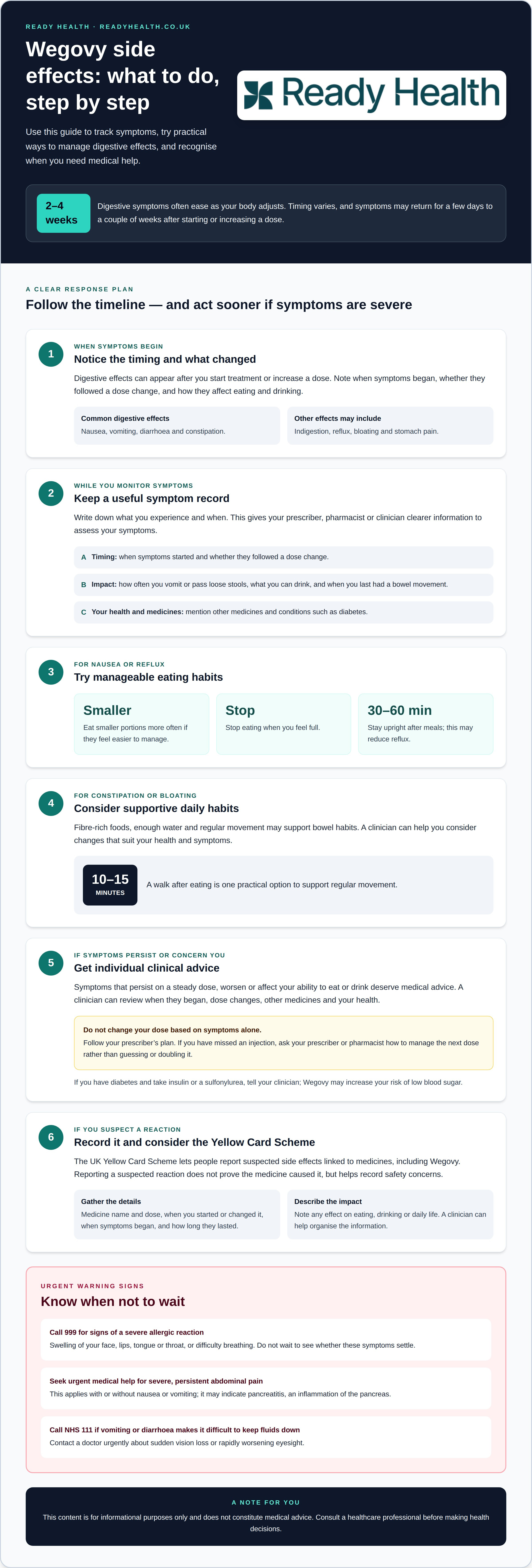
With Wegovy injections, digestive symptoms often ease within 2 to 4 weeks as your body adjusts. They may return for a few days to a couple of weeks after starting or increasing a dose. Symptoms that persist on a steady dose need medical advice.
According to the MHRA, very common side effects affect more than 1 in 10 people. Nausea, vomiting, diarrhoea and constipation are common digestive reactions; indigestion, reflux, bloating and stomach pain may also occur. Dose changes and your health can affect how long symptoms last.
Wegovy and Mounjaro can cause similar digestive effects, including nausea, vomiting, diarrhoea and constipation. Responses vary, so another person’s experience cannot predict yours.
UK Wegovy injections generally start at 0.25 mg once weekly, with increases every four weeks over 16 weeks. Each dose step lasts four weeks. Follow your prescriber’s plan rather than changing the dose because symptoms appear.
Wegovy should not be used during pregnancy. If you have diabetes and take insulin or a sulfonylurea, a type of medicine used to lower blood sugar, you may have an increased risk of low blood sugar. Wegovy may not be suitable for everyone, so discuss your circumstances with your prescriber.
The MHRA reports non-arteritic anterior ischaemic optic neuropathy, a condition affecting blood flow to the optic nerve, as a very rare side effect of Wegovy tablets, affecting up to 1 in 10,000 people. Contact a doctor urgently about sudden vision loss or rapidly worsening eyesight.
In England, NHS specialist weight-management services may offer Wegovy if you have a weight-related condition and a BMI (body mass index) of 35 or more, after conventional treatment has not worked. A BMI of 30 to 34.9 may qualify following specialist referral. In Preston, ask your prescriber, pharmacist or GP for symptom advice, or call NHS 111 if you’re worried. Private costs depend on the service and are provided after a quote request.
How a clinician can help manage nausea, diarrhoea, constipation and bloating
A clinician can advise you on Wegovy side effects in Preston by reviewing when nausea or stomach upset began, whether it followed a dose change, and how it affects eating and drinking. They may ask about vomiting, bowel changes, other medicines and conditions such as diabetes to assess your symptoms and risk of dehydration.
An assessment can also help identify practical changes for nausea. Smaller portions eaten more often may be easier to manage; stop when you feel full. Staying upright for 30-60 minutes after meals may reduce reflux. If vomiting or diarrhoea makes it difficult to keep fluids down, call NHS 111.
For constipation, fibre-rich foods, enough water and regular movement may support bowel habits. A 10-15-minute walk after eating is one practical option. A clinician can review your usual diet, fluid intake and activity, then help identify changes that suit your health and symptoms. They can also consider whether bloating appears alongside constipation or indigestion.
Describe how often you’re vomiting or passing loose stools, what you can drink, and when you last had a bowel movement. If you have diabetes and use insulin or a sulfonylurea, a type of medicine used to lower blood sugar, mention it because Wegovy may increase the risk of low blood sugar. A pharmacist can discuss your medicines and symptom relief.
Seek urgent medical help for severe, persistent abdominal pain, with or without nausea or vomiting. It may indicate pancreatitis, an inflammation of the pancreas. If you’ve missed an injection, ask your prescriber or pharmacist how to manage the next dose rather than guessing or doubling it.
Hair loss and injection-site reactions
Hair shedding can occur during semaglutide treatment and weight loss, but the pattern and timing vary. Hair often grows back within 3 to 6 months after treatment-related shedding. If heavy loss continues beyond 6 months, speak with a GP to assess other possible causes, including illness, diet or changes in your health.
Note when the shedding began, whether it followed weight changes, and whether you have other symptoms. A clinician can review these details and your medicines, then decide whether further assessment is appropriate. Blood sugar changes or another health condition may also be relevant, particularly if you have diabetes.
Beyond hair changes, noticeable weight loss can also alter facial volume and skin elasticity. For those navigating these physical transitions, aesthetic clinics such as Monday Aesthetics & Consulting provide an example of how patients explore personalized consultations and non-surgical cosmetic treatments.
Injection-site reactions may affect up to 1 in 10 people using Wegovy, Mounjaro or Saxenda. Keep track of when a reaction appears and whether it changes after an injection. A clinician can help assess the area and consider whether the symptoms fit a local reaction or need further investigation.
Allergic reactions are different from a local injection-site response. The MHRA reports severe allergic reactions, including anaphylactic reactions and angioedema, as rare side effects of Wegovy tablets, affecting up to 1 in 1,000 people. Angioedema means sudden swelling beneath the skin; anaphylaxis is a severe reaction that can affect breathing. Seek emergency help by calling 999 for swelling of your face, lips, tongue or throat, or difficulty breathing. Don’t wait to find out whether these symptoms settle.
For less urgent concerns, tell your prescriber when symptoms started, where they occur, and whether they’re worsening. Include recent dose changes and other medicines. This gives the clinician a clearer picture and helps them decide what support or assessment may be appropriate.
Getting clinical support to report suspected side effects through the UK Yellow Card Scheme
The UK Yellow Card Scheme lets people report suspected side effects linked to medicines, including Wegovy. A clinician can help you describe what happened clearly and distinguish the timeline from other health changes. Reporting a suspected reaction doesn’t prove the medicine caused it, but it helps record safety concerns.
Before preparing a report, gather details a clinician can help organise: the medicine name, dose, when you started or changed it, and when symptoms began. Describe what you experienced, how long it lasted, and whether it affected eating, drinking or daily activities. For example, note constipation, vomiting, reduced fluid intake or swelling, and mention other medicines or health conditions.
Be specific about changes over time. A clinician may help distinguish a local injection reaction from symptoms elsewhere and record whether symptoms improved after treatment changed. Include relevant details such as a recent dose increase, stomach pain or signs that could suggest a gallbladder problem. Don’t leave out symptoms simply because they seem unrelated.
You can report a suspected side effect through the Yellow Card Scheme, with clinical support if you need help describing it. Keep a copy of the information you submit, and tell your prescriber separately so they can assess your treatment. A report is not a substitute for medical care or advice.
Act on serious symptoms first. Call 999 for difficulty breathing or swelling of the face, lips, tongue or throat. Sudden severe stomach pain spreading to your back also needs emergency attention. If vomiting or diarrhoea stops you keeping fluids down, contact NHS 111. Do not delay urgent care to complete a report; reporting can follow when you are safe.
Ready Health services and how to get support
Ready Health offers private GP consultations and weight-loss injections, including Wegovy and semaglutide. If you have concerns about Wegovy side effects in Preston, a GP appointment gives you time to explain them and discuss suitable support.
Consider a consultation if symptoms are affecting your routine or you’re uncertain about your treatment. Bring your medication details and a brief timeline of what you’ve experienced. Include dose changes, other medicines you take and relevant health conditions to give the clinician useful context.
Ready Health provides private GP consultations lasting 15 or 30 minutes. You can choose the appointment length that suits the amount you want to discuss. A focused concern may need less discussion, while several questions about your health and treatment may call for more time.
If you’re considering weight-loss treatment, a clinician can discuss your health and factors relevant to whether treatment is suitable. You can also ask questions about your current plan and learn when a symptom needs urgent attention rather than a routine appointment. Explain your concerns openly and ask for guidance tailored to your circumstances.
Prepare any questions you want answered, such as whether a symptom could be related to treatment or what information to keep for a follow-up. Clear details can help make the consultation focused and useful.
If you’d like to discuss your symptoms or treatment, book an appointment with Ready Health.
Frequently Asked Questions
What is Wegovy®?
Wegovy is a prescription medicine containing semaglutide, used to support weight management. In the UK, it is available as a weekly injection. It forms part of a treatment plan, and a prescriber considers your health and circumstances before recommending it. Don’t use someone else’s medicine or change how you take your own without clinical advice.
Are there any side effects or long-term risks?
Yes. Like other medicines, Wegovy can cause unwanted effects, some of which may need medical assessment. Long-term risks are still being studied, so keep your prescriber informed about new or persistent symptoms and changes in your health. You can also report a suspected reaction through the UK Yellow Card Scheme. Reporting records concerns but doesn’t establish their cause.
Do I still need to diet and exercise?
Wegovy is not a substitute for sustainable routines around food and movement. A manageable plan might include regular meals that suit your needs and activity you can maintain in everyday life. Your goals, mobility and health conditions all matter. If you find lifestyle changes difficult, discuss realistic support with a qualified clinician rather than following a restrictive plan—clinical resources such as houstonmedicalwellness.com illustrate how medical guidance and lifestyle adjustments can be combined effectively.
Do side effects get worse with a higher dose?
Not necessarily. People can respond differently, and a higher prescribed dose doesn’t mean symptoms will automatically become more severe. The prescriber plans dose increases as part of treatment. If a change in your symptoms concerns you, explain what changed and when. Don’t increase, reduce or skip doses on your own.
Does the Wegovy pill cause constipation?
Constipation can occur with Wegovy tablets. Your usual bowel pattern, food and fluid intake, activity and other medicines may all be relevant when a clinician assesses it. Mention any lasting change, pain or difficulty passing stools, especially if it affects your daily routine. This context helps distinguish a new medicine-related symptom from another possible cause.
This content is for informational purposes only and does not constitute medical advice. Consult a qualified professional before making health decisions.

Article by
Shamir Patel
Shamir Patel is a UK-based Clinical Pharmacist and Independent Prescriber with a specialist focus on ADHD and weight management.
He is the Registered CQC Manager at Ready Health Medical Clinic, where he leads the development and delivery of safe, patient-centred services across ADHD assessment and treatment, weight loss programmes, and general medical care.
With a career spanning nearly three decades since qualifying in 1995, Shamir brings extensive clinical and operational experience across both community pharmacy and private healthcare.
He also serves as Deputy Superintendent Pharmacist and Lead Prescriber at PillSorted. He oversees high-volume prescribing services. He focuses on GLP-1 weight loss treatments and clinical governance.
Shamir is a SCOPE-accredited obesity specialist and has a strong interest in improving access to evidence-based ADHD care. He is known for his structured, guideline-driven approach, aligning his clinical practice with NICE recommendations and regulatory standards set by the GPhC and CQC.
Alongside his clinical work, Shamir is actively involved in mentoring prescribing pharmacists, developing standard operating procedures, and contributing to service innovation within digital and community healthcare settings. His work reflects a commitment to safe prescribing, patient education, and improving outcomes through practical, accessible care.
Disclaimer
The information on this website is provided for general educational and informational purposes only and is not intended as medical advice, diagnosis, or treatment. Articles reflect general guidance and may not be suitable for your individual circumstances. You should always seek advice from a qualified healthcare professional before starting, stopping, or changing any treatment, medication, or healthcare plan. While we aim to keep our content accurate and up to date, Ready Health makes no guarantees about the completeness, accuracy, or suitability of the information provided. Reliance on any information on this site is entirely at your own risk. If you have concerns about your health, please book an appointment with a suitably qualified clinician. In an emergency, contact 999 or attend your nearest A&E department.
Frequently asked questions
What is Wegovy®?
Wegovy is a prescription medicine containing semaglutide, used to support weight management. In the UK, it is available as a weekly injection. It forms part of a treatment plan, and a prescriber considers your health and circumstances before recommending it. Don’t use someone else’s medicine or change how you take your own without clinical advice.
Are there any side effects or long-term risks?
Yes. Like other medicines, Wegovy can cause unwanted effects, some of which may need medical assessment. Long-term risks are still being studied, so keep your prescriber informed about new or persistent symptoms and changes in your health. You can also report a suspected reaction through the UK Yellow Card Scheme. Reporting records concerns but doesn’t establish their cause.
Do I still need to diet and exercise?
Wegovy is not a substitute for sustainable routines around food and movement. A manageable plan might include regular meals that suit your needs and activity you can maintain in everyday life. Your goals, mobility and health conditions all matter. If you find lifestyle changes difficult, discuss realistic support with a qualified clinician rather than following a restrictive plan.
Do side effects get worse with a higher dose?
Not necessarily. People can respond differently, and a higher prescribed dose doesn’t mean symptoms will automatically become more severe. The prescriber plans dose increases as part of treatment. If a change in your symptoms concerns you, explain what changed and when. Don’t increase, reduce or skip doses on your own.
Does the Wegovy pill cause constipation?
Constipation can occur with Wegovy tablets. Your usual bowel pattern, food and fluid intake, activity and other medicines may all be relevant when a clinician assesses it. Mention any lasting change, pain or difficulty passing stools, especially if it affects your daily routine. This context helps distinguish a new medicine-related symptom from another possible cause. This content is for informational purposes only and does not constitute medical advice. Consult a qualified professional before making health decisions.

Related articles...

Nov 29, 2026
Private vertigo assessment and diagnosis in BoltonA vertigo diagnosis may take more than one step, so...

Nov 28, 2026
Employee Health Screening Packages in St Helens for Your TeamCould one screening plan suit every role in your workforce?...

Nov 26, 2026
Can you suddenly become allergic to cats or dogs?Yes, you can develop an allergy to cats or dogs...