November 29, 2026
Private vertigo assessment and diagnosis in Bolton

A vertigo diagnosis may take more than one step, so there is no single timeline that applies to everyone. If you are looking for a private clinic for vertigo assessment in Bolton, the time needed depends on your symptoms, examination findings and whether further assessment is required.
It is understandable to want answers when dizziness or unsteadiness affects daily life. An assessment can help a clinician consider possible causes, including inner-ear conditions and problems affecting balance or coordination, rather than treating every episode as the same.
This guide explains which vertigo conditions and balance symptoms may be assessed, what the diagnostic process can involve and how follow-up is planned. You will also learn what information can help your clinician understand your symptoms, when a neurological assessment may be relevant, and how Ready Health’s private GP and neurology consultations may support your next step.
Key Takeaways
- Dizziness, unsteadiness and falls can have different causes, so a clinical assessment considers your symptoms alongside balance, coordination and movement.
- A vestibular assessment may include an appointment and tailored exercises, with progress and follow-up shaped by your needs.
- Neurologists and other clinicians may assess vertigo; the right specialist depends on the symptoms and the type of assessment required.
- Ready Health’s private GP consultations can help you discuss symptoms and next steps, while its medical reports and health checks address other clinical needs.
Table of Contents
Neurological symptoms, including dizziness and balance problems
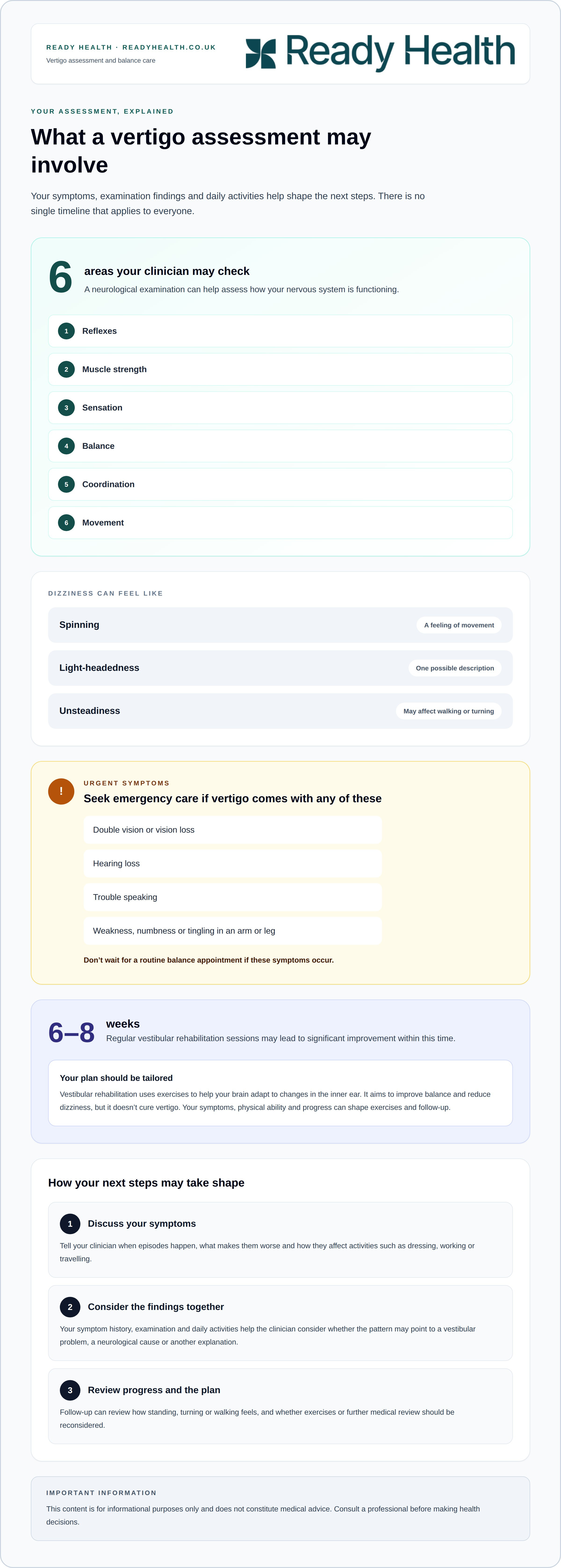
Dizziness can feel like spinning, light-headedness or unsteadiness, and may affect walking, turning or everyday activities. A neurological examination can assess reflexes, muscle strength, sensation, balance, coordination and movement. These checks help a clinician understand how your nervous system is functioning and whether symptoms extend beyond vertigo. Your initial assessment should consider when symptoms occur, what makes them worse and how they affect your mobility.
Seek emergency care for vertigo with double vision or vision loss, hearing loss, trouble speaking, or weakness, numbness or tingling in an arm or leg. The UK Government identifies these symptoms as needing urgent attention. Don’t wait for a routine balance appointment if they occur.
Falls prevention starts with identifying situations that challenge your balance, such as standing up, turning or walking on uneven ground. A clinician can assess how these movements affect you and discuss ways to reduce risk during daily activities. Balance training may then use supervised, progressive tasks to practise posture, stepping and coordination. The programme should suit your symptoms and physical ability, rather than rely on a generic routine.
Balance treatment depends on the cause. Vestibular rehabilitation uses exercises to help your brain adapt to changes in the inner ear; it aims to improve balance and reduce dizziness, but doesn’t cure vertigo. Regular therapy sessions may lead to significant improvement within six to eight weeks. Ongoing support can adjust training as your symptoms and mobility change. Neurological symptoms can have different causes; an online ADHD assessment addresses a separate concern, not vertigo.
Assessment of vestibular difficulties
A private clinic for vertigo assessment in Bolton can start by clarifying what you need from the appointment. The clinician may ask how episodes affect tasks such as dressing, working or travelling. Your answers help shape the assessment and show which activities matter most to you. Mention any changes since your symptoms began, including whether episodes are becoming more frequent or affecting new activities.
Assessment methods depend on your symptoms and clinical findings. The clinician may observe your balance while you stand or walk, or check how you respond to a change in position. These observations help determine whether further vestibular assessment is appropriate. If a test brings on dizziness, describe how it feels and how long it lasts so the clinician can interpret the response.
If physiotherapy is recommended, the physiotherapist can choose exercises that suit your abilities and practical goals. For example, the plan might focus on moving confidently between rooms or managing turns while walking. Follow-up sessions let you discuss which tasks remain difficult and whether exercises need adjusting. Recovery and session planning depend on your symptoms and how they affect everyday activities.
If Bolton has limited options, nearby services offering vestibular physiotherapy or ear, nose and throat assessment may be relevant. A private clinic for vertigo assessment in Bolton should explain whether the appointment focuses on identifying a cause, assessing balance or planning rehabilitation. The right service depends on your symptoms and the clinical input you need. This distinction helps you understand what the assessment can address.
Possible causes of vestibular disorders include inner-ear infections, head injuries, ageing and certain medications that affect ear function. In cases where head or neck trauma may be involved, educational resources from clinics like Precision Spinal Care highlight how upper cervical alignment and the nervous system can contribute to balance and healing. These are possibilities to consider, not conclusions about the cause of any one person’s symptoms. Sharing relevant details about your symptoms and medicines can help focus the discussion on what should be assessed. The clinician can consider this information alongside your symptoms and examination findings, rather than treating one possible cause as certain. If you are unsure whether a medicine is relevant, raise it during the appointment.
Diagnosis and follow-up
Your initial assessment brings together your symptom history, examination findings and the effect on daily activities. A clinician considers whether the pattern points towards a vestibular problem, a neurological cause or another explanation. For example, brief spinning after a change in head position gives different information from persistent unsteadiness while walking. The diagnosis and next steps should reflect the evidence gathered, not symptoms alone.
If rehabilitation is appropriate, the plan should match your needs and functional goals. One person may prioritise walking steadily around the home, while another may want to manage busy environments or return to usual activities. A tailored programme can set relevant exercises and build activity at a suitable pace. The clinician can explain what each exercise aims to address and how to report any change in symptoms.
Follow-up sessions help assess whether the plan is supporting your mobility and everyday activities. You might review how standing, turning or walking feels compared with your initial assessment. If symptoms remain difficult or change, the clinician can reconsider the rehabilitation approach and whether further medical review is needed. This keeps treatment connected to your daily function rather than relying on a fixed programme.
Track practical changes between appointments, such as whether dizziness interrupts dressing, shopping or using stairs. These examples give the clinician clearer information than a general report of feeling better or worse. You can discuss which activities are improving, which remain challenging and whether your rehabilitation goals still fit. A clear review plan also helps you understand the next step and when progress will be assessed.
What types of specialists assess vertigo at private clinics in Bolton?
A private clinic for vertigo assessment in Bolton may involve a GP, neurologist or physiotherapist, depending on your symptoms. A GP can review your health history and consider possible causes, including medication effects or other health concerns. If your symptoms suggest a nervous system issue, a neurologist may assess you further. The clinician’s role should match the question you need answered.
Neurologists assess conditions affecting the brain, nerves and movement. Their review may be relevant if dizziness occurs alongside changes in coordination, sensation or muscle strength. An ear, nose and throat specialist may assess concerns involving the inner ear or hearing. These specialists consider different possible causes, so the pattern of your symptoms helps guide the appropriate assessment.
A physiotherapist focuses on movement and balance. They may assess how vertigo affects walking, posture or daily activities, then consider whether vestibular rehabilitation is suitable. This differs from investigating the underlying medical cause. Some people may need both clinical assessment and movement-focused support, with each professional contributing to a different part of their care.
When choosing a private clinic for vertigo assessment in Bolton, consider which specialist will lead the appointment and what the assessment covers. Ask how the clinician will explain findings, arrange further review if needed and identify suitable follow-up. For example, a consultation focused on neurological symptoms has a different purpose from physiotherapy aimed at improving balance. Understanding that distinction helps you know what the appointment is designed to address.
Ready Health: Medical Reports & Occupational Assessments
Ready Health can help you take a considered next step when dizziness needs medical discussion or you need an occupational assessment. A Private GP Consultation (15 Minutes) or Private GP Consultation (30 Minutes) gives you time to discuss symptoms and possible next steps. Choose the appointment length that suits the detail you want to cover.
Explain when vertigo occurs, how it affects your daily activities and what you hope to clarify. Occupational reports serve a different purpose from clinical discussions about symptoms. They document information for a specific assessment or application, rather than providing vestibular rehabilitation or balance training.
Ready Health’s medical reports and occupational assessments include insurance medicals, pre-employment medicals, taxi medicals, visa medicals, PIP reports and Fit to Drive Assessments. Each serves a distinct reporting or assessment need. For example, a PIP report relates to a benefits assessment, while a Fit to Drive Assessment concerns driving fitness. The appropriate option depends on the purpose of the report or assessment you need.
Ready Health also offers a Well Woman Blood Profile as a separate health-check option. It is not a vertigo assessment, so keep these needs distinct. If dizziness is your concern, discuss it during a GP consultation to focus on your symptoms and appropriate next steps.
Before your appointment, note when symptoms arise and how they affect activities such as walking or working. This gives you a clear starting point for discussing your needs and whether a GP consultation or occupational assessment is relevant.
Book with Ready Health to discuss the next step that suits your needs.
Frequently Asked Questions
How long does it take to receive a diagnosis?
There is no set timeframe for a vertigo diagnosis. A clinician may identify a likely cause during your first appointment, while other presentations require further review or investigation. The next step depends on your symptom pattern, examination findings and whether additional assessment is needed. Ask what the clinician has concluded so far, what remains uncertain and how you will receive updates about planned follow-up.
Which private clinics in Bolton assess vertigo and dizziness?
Ready Health is based in Standish, Wigan, and serves patients in Bolton with private GP consultations and private neurology consultations with Dr Nasir Mirza. A GP can discuss your symptoms and help establish appropriate next steps; a neurologist assesses conditions affecting the nervous system. The right appointment depends on your concerns and the clinical review you need.
Do Bolton private clinics offer vestibular and balance tests?
Some clinics provide balance assessments, but the tests used vary according to the service and clinical question. An assessment might involve observing how you stand or walk, while specialist vestibular testing examines inner-ear balance function. Ready Health offers private neurology and physiotherapy consultations to support clinical discussion of neurological or movement concerns. Your clinician can explain the purpose of any assessment they recommend.
What happens during a private vertigo assessment?
A private assessment usually begins with a discussion of your symptoms, health history and medicines. The clinician then chooses examination steps relevant to your presentation, such as observing your balance or movement. Describe how episodes affect activities such as driving, work or shopping. The appointment should clarify the findings, recommended next steps and whether further assessment or follow-up is appropriate.
This content is for informational purposes only and does not constitute medical advice. Consult a qualified healthcare professional before making decisions about your health.

Article by
Shamir Patel
Shamir Patel is a UK-based Clinical Pharmacist and Independent Prescriber with a specialist focus on ADHD and weight management.
He is the Registered CQC Manager at Ready Health Medical Clinic, where he leads the development and delivery of safe, patient-centred services across ADHD assessment and treatment, weight loss programmes, and general medical care.
With a career spanning nearly three decades since qualifying in 1995, Shamir brings extensive clinical and operational experience across both community pharmacy and private healthcare.
He also serves as Deputy Superintendent Pharmacist and Lead Prescriber at PillSorted. He oversees high-volume prescribing services. He focuses on GLP-1 weight loss treatments and clinical governance.
Shamir is a SCOPE-accredited obesity specialist and has a strong interest in improving access to evidence-based ADHD care. He is known for his structured, guideline-driven approach, aligning his clinical practice with NICE recommendations and regulatory standards set by the GPhC and CQC.
Alongside his clinical work, Shamir is actively involved in mentoring prescribing pharmacists, developing standard operating procedures, and contributing to service innovation within digital and community healthcare settings. His work reflects a commitment to safe prescribing, patient education, and improving outcomes through practical, accessible care.
Disclaimer
The information on this website is provided for general educational and informational purposes only and is not intended as medical advice, diagnosis, or treatment. Articles reflect general guidance and may not be suitable for your individual circumstances. You should always seek advice from a qualified healthcare professional before starting, stopping, or changing any treatment, medication, or healthcare plan. While we aim to keep our content accurate and up to date, Ready Health makes no guarantees about the completeness, accuracy, or suitability of the information provided. Reliance on any information on this site is entirely at your own risk. If you have concerns about your health, please book an appointment with a suitably qualified clinician. In an emergency, contact 999 or attend your nearest A&E department.
Frequently asked questions
How long does it take to receive a diagnosis?
There is no set timeframe for a vertigo diagnosis. A clinician may identify a likely cause during your first appointment, while other presentations require further review or investigation. The next step depends on your symptom pattern, examination findings and whether additional assessment is needed. Ask what the clinician has concluded so far, what remains uncertain and how you will receive updates about planned follow-up.
Which private clinics in Bolton assess vertigo and dizziness?
Ready Health is based in Standish, Wigan, and serves patients in Bolton with private GP consultations and private neurology consultations with Dr Nasir Mirza. A GP can discuss your symptoms and help establish appropriate next steps; a neurologist assesses conditions affecting the nervous system. The right appointment depends on your concerns and the clinical review you need.
Do Bolton private clinics offer vestibular and balance tests?
Some clinics provide balance assessments, but the tests used vary according to the service and clinical question. An assessment might involve observing how you stand or walk, while specialist vestibular testing examines inner-ear balance function. Ready Health offers private neurology and physiotherapy consultations to support clinical discussion of neurological or movement concerns. Your clinician can explain the purpose of any assessment they recommend.
What happens during a private vertigo assessment?
A private assessment usually begins with a discussion of your symptoms, health history and medicines. The clinician then chooses examination steps relevant to your presentation, such as observing your balance or movement. Describe how episodes affect activities such as driving, work or shopping. The appointment should clarify the findings, recommended next steps and whether further assessment or follow-up is appropriate. This content is for informational purposes only and does not constitute medical advice. Consult a qualified healthcare professional before making decisions about your health.

Related articles...

Nov 28, 2026
Employee Health Screening Packages in St Helens for Your TeamCould one screening plan suit every role in your workforce?...

Nov 27, 2026
How long Wegovy side effects last and what may helpSide effects deserve more than a countdown. If you’re looking...

Nov 26, 2026
Can you suddenly become allergic to cats or dogs?Yes, you can develop an allergy to cats or dogs...