November 1, 2026
Private contraception consultation in Standish for method choices

You don’t have to stay with a contraceptive method that no longer suits you. A private contraception consultation in Standish gives you the chance to discuss your current method, health history, symptoms and preferences with a clinician.
It’s reasonable to want contraception that fits your health and daily life, especially if you’re experiencing unwanted effects or your needs have changed. A consultation can help you compare hormonal and non-hormonal methods and understand what to consider when switching.
Learn how different methods work, which health details may shape the discussion, and how symptoms can inform your next steps. You’ll also find out what to expect from a private consultation and how to prepare for a clear conversation about your choices.
Key Takeaways
- You can discuss switching contraception if your current method no longer suits your needs, symptoms or preferences.
- Compare hormonal and non-hormonal options by considering how each fits your health history and routine.
- Note changes in bleeding, mood or other symptoms to help guide a focused conversation about heavy periods and PMS.
- A private GP consultation gives you space to review your medical history and discuss possible benefits, risks and side effects.
Table of Contents
Hormonal and non-hormonal methods
Changing contraception is an option if your current method no longer fits your health, preferences or routine. Your choice may include a hormonal method, a non-hormonal method or a longer-acting option.
Hormonal Contraceptive Options
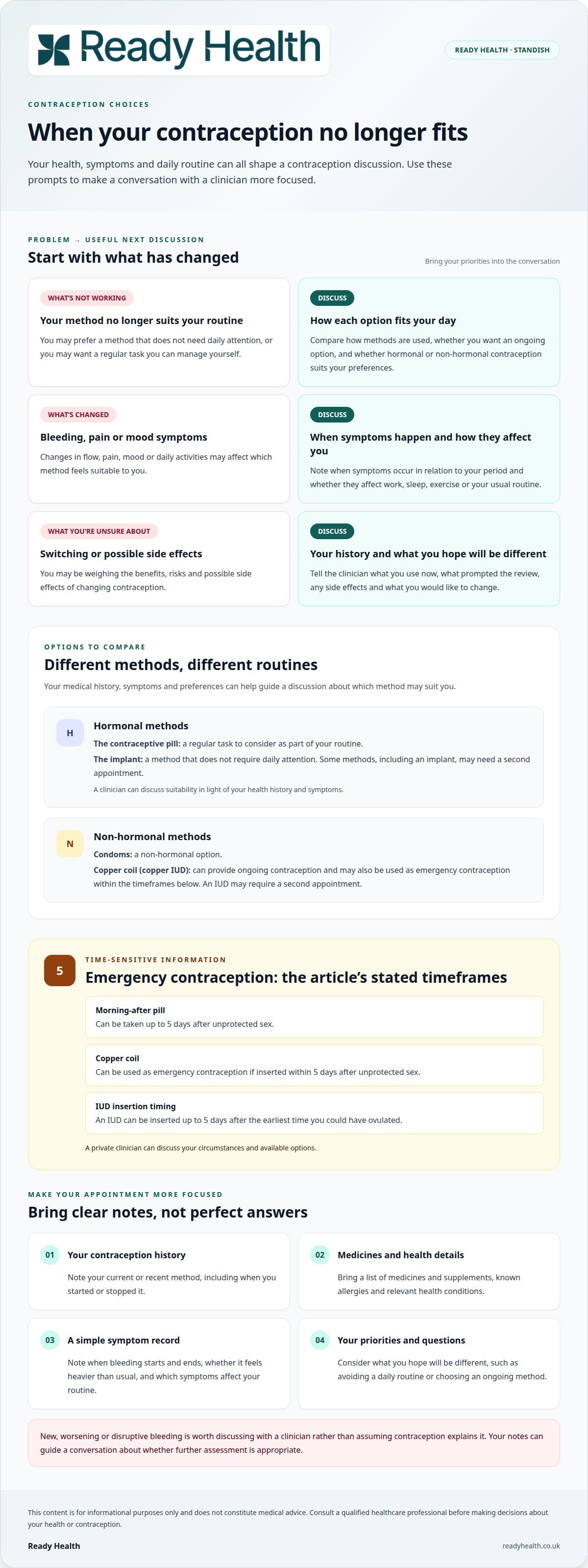
Hormonal methods include the contraceptive pill and implant. They differ in how they’re used and fit into your routine, so consider whether you prefer a regular task or a method that doesn’t require daily attention. A clinician can discuss suitability in light of your health history and symptoms.
Private consultations are available through private medical clinics serving Standish. A clinician can discuss whether a contraceptive pill is suitable and whether prescribing is appropriate. Some UK pharmacies provide the contraceptive pill without a prescription.
Non-Hormonal Contraceptive Options
Non-hormonal choices include condoms and the copper coil, also called a copper IUD. A copper coil can provide ongoing contraception; it can also be used as emergency contraception if inserted within 5 days after unprotected sex. An IUD can be inserted up to five days after the earliest time you could have ovulated.
Emergency contraception is time-sensitive: the morning-after pill can be taken up to 5 days after unprotected sex. Some pharmacies provide emergency contraception at no cost to women under 25. A private clinician can discuss your circumstances and available options.
Choosing a Contraceptive Method
Compare methods by considering your medical history, symptoms, preference for hormonal or non-hormonal contraception, and whether you want an ongoing method. Bring details of your current contraception and any changes you’ve noticed to the consultation. You can then discuss switching and how to manage the change.
In the UK, free contraception, including emergency contraception, is available from sexual health clinics, some GP surgeries, some pharmacies and some young people’s services. Sexual health clinic visits are confidential. If staff think you may be at risk of harm, they may need to involve other healthcare services, but they will talk with you first. Private consultation and procedure costs depend on the method and care needed. Choose a clinic that provides the specific service you need, such as an implant fitting or coil insertion.
Contraception for heavy periods and PMS
Heavy bleeding and premenstrual symptoms can affect which contraceptive method feels suitable. During an appointment, describe what happens across your periods, including changes in flow, pain, mood or daily activities. These details help focus the discussion on your priorities rather than treating contraception as a one-size-fits-all choice.
Some hormonal methods may affect bleeding patterns, so discuss whether that possibility suits your needs. If bleeding is your main concern, explain how it affects work, sleep or exercise. If PMS symptoms are more difficult, note what you experience and when it occurs in relation to your period. A clear example gives the clinician useful context.
Bring your medical history into the conversation. Mention your current or previous contraception, any side effects, and medicines or health conditions relevant to your care. If you’re considering a change, explain what you hope will be different. A clinician can use this information to discuss options and factors that matter in your circumstances.
A simple symptom record can make the appointment more focused. Note when bleeding starts and ends, whether it feels heavier than usual, and which symptoms affect your routine. You might also record whether symptoms change between periods. These observations don’t diagnose a cause, but they give you specific points to discuss alongside your sexual health and contraception preferences.
Seek medical advice about new, worsening or disruptive bleeding rather than assuming contraception explains it. The discussion may include whether further assessment is appropriate, as well as whether a different method better suits your priorities. For a considered review of periods, symptoms and contraception, you can book a private appointment.
Initial consultation and medical history review
A contraception appointment starts with your priorities: preventing pregnancy, managing symptoms or changing treatment. Explain what you use now, what prompted the review and any side effects. For example, say whether a symptom began after starting a method or was already present. That timeline gives the clinician useful context.
Your medical history helps guide a safe, relevant discussion. Be ready to mention health conditions, prescribed medicines, allergies and previous experiences with contraception. Include changes in periods, relevant sexual health concerns, and whether you may be pregnant. These details help the clinician consider how a method could fit your circumstances.
Before your appointment, gather a few practical details:
- Your current or recent contraceptive method, including when you started or stopped it.
- A list of medicines and supplements, with any known allergies.
- Examples of symptoms, such as bleeding changes, headaches or mood changes.
- Your priorities, such as avoiding daily routines or choosing an ongoing method.
To book near Standish, contact Ready Health to arrange a private contraception consultation. Bring your medication details and notes about symptoms. You can also write down questions about switching, treatment choices or possible side effects.
Some methods, including an implant or intrauterine device (IUD), may require a second appointment. The clinician can explain the steps involved and whether another visit is needed for the method you discuss. A first consultation can still help you review your medical history and clarify your options before deciding.
Your conversation can include sexual health, previous contraception and any concerns about privacy. Raise sensitive details directly and ask how they relate to your choices. If you’ve seen a specialist before, bring relevant records or explain what was discussed, so the clinician can understand your care history without relying on memory alone.
Procedure risks, benefits and possible side effects
Before an implant or intrauterine device (IUD) procedure, discuss its purpose, expected benefits and possible complications with the clinician. Ask what the appointment involves, what you might feel afterwards, and which changes should prompt medical advice. Clear answers help you weigh the procedure against your preferences and health history.
Long-acting reversible contraception includes implants and IUDs, and these methods are described as over 99% effective. An IUD can be left in place for five years to provide ongoing contraception. No contraceptive method is 100% foolproof, so ask how effectiveness, pregnancy prevention and follow-up apply to the method you’re considering.
For an implant, ask about insertion, removal and replacement, including how each step is arranged. For an IUD, discuss insertion, removal and what to expect during the procedure. These are practical questions, not reasons to assume either method is unsuitable. Your clinician can explain the relevant process and potential side effects for your individual choice.
Use the consultation to compare the benefits with the impact of a procedure. Consider whether you want ongoing contraception, how comfortable you feel with an insertion, and what matters if you later want pregnancy. Ask how to seek advice if you notice an unexpected change after fitting, and what follow-up is appropriate for your method.
Before agreeing, summarise your understanding: the method selected, its expected duration, the procedure steps, possible side effects, and the plan for removal or replacement. Raise any unanswered concerns before the procedure, including how it fits with your medical history. This gives you a clearer basis for informed consent and a practical plan for ongoing care.
If you’d like to discuss contraception procedures and their considerations, book a consultation.
Ready Health: Private GP Consultation (15 Minutes)
Ready Health’s Private GP Consultation (15 Minutes) gives you time to discuss contraception questions, your medical history and any symptoms affecting your choice. It may suit you if you want to review your current method, explore what to raise with a clinician, or understand whether further care is appropriate.
Bring details of your current contraception, medicines and any side effects you’ve noticed. You can also note your priorities, such as changing methods or discussing bleeding patterns, to help keep the conversation focused. The consultation is a chance to discuss your concerns and next steps with a GP.
If you’d like to discuss your contraception concerns, book a GP consultation with Ready Health.
Take your next step with confidence
Your contraception can change as your health, priorities and circumstances evolve. Use your next conversation to decide what matters most, whether that’s fewer routine tasks, support with symptoms or exploring a different method. A private contraception consultation in Standish gives you a chance to discuss those priorities with a clinician and consider a suitable next step.
Ready Health also offers a Private GP Consultation (30 Minutes) and a Well Woman Blood Profile. These may be relevant if you want more time to discuss wider health concerns or explore a blood test as part of your care.
This content is for informational purposes only and does not constitute medical advice. Consult a healthcare professional before making health decisions.
Contact Ready Health to discuss your options. Taking time to make an informed choice is a positive step towards care that fits you.
Frequently Asked Questions
Can I switch contraceptive methods if I’m not satisfied with my current one?
Yes, you can discuss switching if your current method doesn’t suit you. Explain what you’d like to change, such as a routine that’s difficult to maintain or symptoms you’ve noticed. The clinician can consider your health history, current method and priorities when discussing alternatives. Ask how to manage the transition so you understand the steps before changing methods.
Can contraception help with issues other than preventing pregnancy?
Yes, some contraceptive methods can also be considered for concerns such as heavy periods or PMS symptoms. Their effects differ, so describe which symptoms trouble you and how they affect everyday activities. For example, explain whether bleeding disrupts work or pain affects sleep. This helps the clinician discuss whether a method aligns with your contraception needs and symptom priorities.
What Is Private Contraception?
Private contraception is care arranged through a private medical service rather than an NHS-funded appointment. A consultation gives you time to discuss pregnancy prevention, method choices, switching and relevant health concerns with a clinician. Depending on your needs, the conversation can also cover your medical history and possible next steps. Private healthcare is self-pay or membership-based.
Where can I book a private contraception consultation in Standish, Greater Manchester?
Ready Health provides Private Contraception Services at its clinic in Standish, Wigan. Contact Ready Health to arrange a consultation about your method choices or concerns. The clinic serves people in nearby areas, including Shevington and Chorley, as well as Standish and Wigan. Share your main question when getting in touch to help you prepare for the appointment.
What contraception methods can I discuss at a private consultation?
You can discuss hormonal options such as the contraceptive pill or implant, alongside non-hormonal choices such as condoms or a copper coil. The discussion can focus on practical differences, including whether you prefer a daily method or longer-acting contraception. Ready Health offers contraceptive implants as part of its women’s health services. Ask about the options relevant to your circumstances and what care each involves.
What is included in a private contraception consultation, and how long does it take?
A consultation can cover your current method, medical history, preferences and questions about symptoms or switching. Ready Health offers Private GP Consultation (15 Minutes) and Private GP Consultation (30 Minutes). Consider the points you want to cover when choosing an appointment length. Bring a list of medicines and note any changes you’ve experienced, so you can use the time to discuss your priorities.
This content is for informational purposes only and does not constitute medical advice. Consult a healthcare professional before making health decisions.

Article by
Shamir Patel
Shamir Patel is a UK-based Clinical Pharmacist and Independent Prescriber with a specialist focus on ADHD and weight management.
He is the Registered CQC Manager at Ready Health Medical Clinic, where he leads the development and delivery of safe, patient-centred services across ADHD assessment and treatment, weight loss programmes, and general medical care.
With a career spanning nearly three decades since qualifying in 1995, Shamir brings extensive clinical and operational experience across both community pharmacy and private healthcare.
He also serves as Deputy Superintendent Pharmacist and Lead Prescriber at PillSorted. He oversees high-volume prescribing services. He focuses on GLP-1 weight loss treatments and clinical governance.
Shamir is a SCOPE-accredited obesity specialist and has a strong interest in improving access to evidence-based ADHD care. He is known for his structured, guideline-driven approach, aligning his clinical practice with NICE recommendations and regulatory standards set by the GPhC and CQC.
Alongside his clinical work, Shamir is actively involved in mentoring prescribing pharmacists, developing standard operating procedures, and contributing to service innovation within digital and community healthcare settings. His work reflects a commitment to safe prescribing, patient education, and improving outcomes through practical, accessible care.
Disclaimer
The information on this website is provided for general educational and informational purposes only and is not intended as medical advice, diagnosis, or treatment. Articles reflect general guidance and may not be suitable for your individual circumstances. You should always seek advice from a qualified healthcare professional before starting, stopping, or changing any treatment, medication, or healthcare plan. While we aim to keep our content accurate and up to date, Ready Health makes no guarantees about the completeness, accuracy, or suitability of the information provided. Reliance on any information on this site is entirely at your own risk. If you have concerns about your health, please book an appointment with a suitably qualified clinician. In an emergency, contact 999 or attend your nearest A&E department.
Frequently asked questions
Can I switch contraceptive methods if I’m not satisfied with my current one?
Yes, you can discuss switching if your current method doesn’t suit you. Explain what you’d like to change, such as a routine that’s difficult to maintain or symptoms you’ve noticed. The clinician can consider your health history, current method and priorities when discussing alternatives. Ask how to manage the transition so you understand the steps before changing methods.
Can contraception help with issues other than preventing pregnancy?
Yes, some contraceptive methods can also be considered for concerns such as heavy periods or PMS symptoms. Their effects differ, so describe which symptoms trouble you and how they affect everyday activities. For example, explain whether bleeding disrupts work or pain affects sleep. This helps the clinician discuss whether a method aligns with your contraception needs and symptom priorities.
What Is Private Contraception?
Private contraception is care arranged through a private medical service rather than an NHS-funded appointment. A consultation gives you time to discuss pregnancy prevention, method choices, switching and relevant health concerns with a clinician. Depending on your needs, the conversation can also cover your medical history and possible next steps. Private healthcare is self-pay or membership-based.
Where can I book a private contraception consultation in Standish, Greater Manchester?
Ready Health provides Private Contraception Services at its clinic in Standish, Wigan. Contact Ready Health to arrange a consultation about your method choices or concerns. The clinic serves people in nearby areas, including Shevington and Chorley, as well as Standish and Wigan. Share your main question when getting in touch to help you prepare for the appointment.
What contraception methods can I discuss at a private consultation?
You can discuss hormonal options such as the contraceptive pill or implant, alongside non-hormonal choices such as condoms or a copper coil. The discussion can focus on practical differences, including whether you prefer a daily method or longer-acting contraception. Ready Health offers contraceptive implants as part of its women’s health services. Ask about the options relevant to your circumstances and what care each involves.
What is included in a private contraception consultation, and how long does it take?
A consultation can cover your current method, medical history, preferences and questions about symptoms or switching. Ready Health offers Private GP Consultation (15 Minutes) and Private GP Consultation (30 Minutes). Consider the points you want to cover when choosing an appointment length. Bring a list of medicines and note any changes you’ve experienced, so you can use the time to discuss your priorities. This content is for informational purposes only and does not constitute medical advice. Consult a healthcare professional before making health decisions.

Related articles...

Oct 31, 2026
Private Mental Health Assessment in St Helens: Your First VisitA private mental health assessment in St Helens begins with...

Oct 30, 2026
Cost of Wegovy privately near Preston and what prices includePrivate Wegovy prices near Preston vary, with the typical market...

Oct 29, 2026
Hypnotherapy for phobias in Preston and estimated sessionsA structured course of hypnotherapy for phobias in Preston may...