October 24, 2026
Talking therapy for anxiety in Standish: CBT and support options

Privacy is often a first concern when you’re considering talking therapy for anxiety in Standish. NICE recommends evidence-based approaches such as cognitive behavioural therapy (CBT) for anxiety disorders, and you can ask a therapist how they handle personal information before sharing details.
This guide explains how CBT works, what talking therapy options may be available, and which concerns they may support, so you can consider a suitable next step.
Key Takeaways
- Understand how CBT can help you recognise patterns between anxious thoughts, feelings and actions.
- Explore the mental health concerns and long-term conditions that talking therapies may support.
- Learn why therapy choice can depend on your needs, preferences and response to initial support.
- Find out how self-referral to NHS talking therapies works in England, including the age and GP-registration criteria.
- Consider whether a private GP consultation could help you discuss your concerns and possible next steps.
Table of Contents
Cognitive behavioural therapy (CBT)
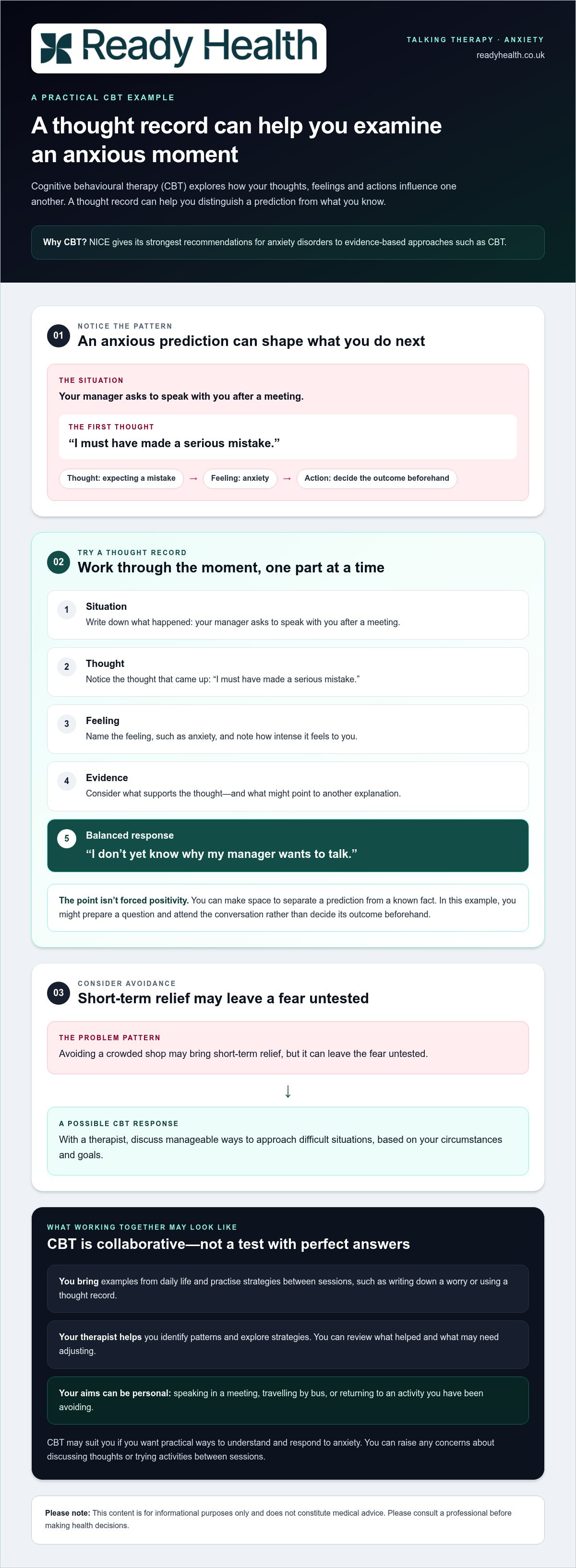
Cognitive behavioural therapy, usually shortened to CBT, explores how thoughts, feelings and actions influence one another. For example, worrying that a work presentation will go badly may increase anxiety and make you avoid practising.
CBT helps you examine that pattern and consider practical ways to respond. The National Institute for Health and Care Excellence gives its strongest recommendations for anxiety disorders to evidence-based approaches such as CBT.
To see examples of CBT exercises for anxiety, watch this video from Barbara Heffernan:
CBT focuses on situations you experience, rather than abstract advice alone. You and your therapist might explore what happened before your anxiety rose, what you thought, and what you did next. This can reveal patterns, such as cancelling plans after imagining the worst outcome.
A thought record can help you look at an anxious moment more clearly. You might note:
- The situation: your manager asks to speak with you after a meeting.
- The thought: “I must have made a serious mistake.”
- The feeling: anxiety, including how intense it feels to you.
- The evidence: what supports the thought, and what might point to another explanation.
- A balanced response: “I don’t yet know why my manager wants to talk.”
This exercise isn’t about dismissing a concern or forcing positive thinking. It creates space to distinguish a prediction from a known fact. In the manager example, you could prepare a question and attend the conversation instead of deciding its outcome beforehand.
CBT may also explore behaviours that keep anxiety going. Avoiding a crowded shop can bring short-term relief, but it may leave the fear untested. With a therapist, you can discuss manageable ways to approach difficult situations, based on your circumstances and goals.
Practising between sessions can help you apply ideas to everyday routines. You might write down a worry, use a thought record, or try a coping strategy in a specific situation. Reviewing what happened gives you and your therapist something concrete to discuss, including what helped and what might need adjusting.
CBT is collaborative, not a test with perfect answers. You bring examples from daily life, while the therapist helps you identify patterns and explore strategies. Goals might include speaking in a meeting, travelling by bus, or returning to an activity you have been avoiding. You can review progress against those personal aims.
CBT may suit you if you want practical ways to understand and respond to anxiety. It can involve discussing thoughts and trying activities between sessions, so raise any concerns about these parts when discussing therapy. A therapist can explain how the approach might relate to your needs and preferences.
CBT isn’t the only talking therapy that may be relevant. For some mental health problems, other approaches may be considered, such as dialectical behaviour therapy for personality disorders. When exploring support, explain what you’re finding difficult and what you hope to work on. You can also ask which approaches may suit your needs. Keeping the focus on your circumstances makes the conversation more specific, without assuming one approach will suit everyone.
Conditions talking therapies can help with
Anxiety is a common reason to consider talking therapy, but it isn’t the only concern these approaches may address. You might seek support for persistent worry, panic, low mood, or difficulty managing a major change. Therapy looks beyond the name of a condition to how thoughts, emotions and daily routines affect your life.
For anxiety, therapy may help you notice situations that trigger worry and understand how you respond. For example, fear of making mistakes at work might lead you to avoid asking questions. Exploring this pattern can help you consider practical ways to manage worry and participate more comfortably.
Depression is another concern people may discuss in therapy. Low mood can affect motivation, sleep, relationships and everyday tasks. Sessions may help you explore difficult thoughts, recognise changes in your routine, and identify manageable actions that support day-to-day functioning. Your goals can reflect the parts of life you want to address.
Talking therapies may also support people living with long-term physical health conditions. Psychological support can help you cope with conditions such as irritable bowel syndrome (IBS), which affects digestion, or chronic pain, which persists over time. Therapy focuses on the emotional and practical effects of a condition, rather than replacing medical care for physical symptoms.
That distinction matters. If pain makes it harder to sleep or attend social plans, you could explore how these changes affect your mood and coping strategies. If IBS-related worry leads you to avoid activities, sessions may help you consider that impact and plan ways to manage everyday challenges. Physical health concerns still need appropriate clinical attention.
Different mental health needs may call for different approaches. For example, dialectical behaviour therapy (DBT) may be offered for personality disorders. It focuses on skills for managing intense emotions and relationships. This illustrates why one type of therapy won’t suit every person or concern.
- Anxiety: explore worry, avoidance, panic or fears affecting daily activities.
- Depression: discuss low mood, reduced motivation and changes to everyday routines.
- IBS or chronic pain: work on the emotional and practical effects of living with ongoing symptoms.
- Personality disorders: a specific approach, such as DBT, may be considered.
You don’t need a diagnosis to seek support. You can discuss a difficulty affecting your wellbeing even without a formal diagnosis. For instance, you might want help with recurring work stress before it disrupts your sleep or relationships. Therapy can focus on the problem you bring, your priorities and strategies suited to your circumstances.
Some concerns need a more tailored route into care. In England, people with eating disorders, bipolar disorder, personality disorders, psychosis, or drug and alcohol problems will usually need a GP referral to access talking therapies. If you’re unsure how your situation fits, describing your symptoms and any existing care can help guide the discussion.
Consider what you want support to change: managing anxious thoughts, coping with chronic pain, or rebuilding routines during depression. These examples give you a clear starting point for discussing psychological support that may suit your needs.
How effective is talking therapy for anxiety, and what are the risks or alternatives?
Talking therapy can offer structured support to understand anxiety and respond to it differently. Consider its usefulness in relation to your priorities, such as attending work meetings, sleeping more comfortably, or returning to social plans. These personal goals provide practical points to discuss, rather than relying only on a general sense of progress.
Progress may mean handling a situation differently, even if anxiety still arises. For example, you might notice worry before travelling by bus but still make the journey using a strategy discussed in therapy. You and your therapist can review what felt manageable, what remained difficult, and whether the approach still fits your needs.
In NHS talking therapies, guided self-help may be offered as a first step. It can involve working through structured materials with support, rather than starting with regular face-to-face sessions. If symptoms don’t improve, another type of therapy may be considered. The next option depends on your needs and what’s available locally.
There isn’t one format or method that suits everyone. NICE recognises that different people may benefit from different kinds of psychological support. Where possible, people should be offered a choice suited to their needs and preferences. You might discuss whether you prefer structured exercises, guided self-help, or another therapeutic approach.
Therapy can also take effort outside appointments. A CBT exercise, for instance, might involve recording anxious thoughts or trying a planned activity between sessions. This may take time or feel challenging, particularly when the situation itself causes anxiety. Tell your therapist what feels difficult so you can discuss the task and its relevance to your goals.
Talking about distressing experiences or worries can bring difficult feelings into focus. Tell your therapist if the pace or subject matter feels uncomfortable. Discussing boundaries and what you want to address can help shape the conversation. If you feel overwhelmed, say so during the session and talk through what support or adjustment might help.
Alternatives may include a different kind of psychological support, rather than ending support altogether. NHS guidance may consider another therapy if guided self-help hasn’t improved symptoms. NICE’s emphasis on choice also means your preferences matter. For example, if written exercises feel unhelpful, explain what format or support would work better for you.
Medication and talking therapy are distinct forms of care, but this section’s available guidance does not establish whether medication is suitable for you. If you’re considering medication, or already taking it, discuss that with an appropriate clinician. They can consider your symptoms, health circumstances and current treatment when discussing options, rather than treating therapy as a substitute for every form of care.
To make a review useful, bring a clear example: a situation that caused anxiety, what you tried, and what happened afterwards. You can also describe what you want to manage more comfortably. These details help you and your therapist consider whether the current approach remains relevant or whether different support might better match your preferences.
NHS options vary according to individual needs and local availability. You can ask which approaches are accessible and how they align with what you hope to address.
How to self-refer to talking therapies
In England, adults aged 18 or over who are registered with a GP can refer themselves to NHS talking therapies for anxiety and depression, according to the NHS. You don’t need to speak to your GP before starting that self-referral route. It gives you a way to ask for support directly when anxiety or low mood affects everyday life.
Access criteria can differ by age and location. In some areas, people aged 16 or over who are registered with a GP can also self-refer. Check the age criteria that apply in your area, because this younger route is not described as available everywhere.
Self-referral is a route into assessment, not a guarantee of a particular therapy. The service considers what you’re experiencing and what support is available locally. NHS talking therapies may be delivered in person, by video or phone, or through an online course. Some areas offer one-to-one sessions, and others also provide group sessions.
Before making a referral, take a moment to describe what has prompted you to seek help. A clear example can make the form or first conversation easier. You could note:
- What’s troubling you: for example, worry about leaving home or persistent low mood.
- How it affects your routine: such as avoiding work calls or struggling to keep up with household tasks.
- What you want help with: for instance, managing anxious thoughts or returning to an activity.
- Any support already in place: include relevant care or treatment you’re receiving.
These details help describe your needs; they don’t have to be polished or use clinical terms. If anxiety makes it difficult to explain everything at once, start with one recent situation. For example, describe what happened when you postponed a journey and how that affected your plans.
In England, people can self-refer to NHS talking therapies for many mental health problems, including anxiety and depression, without speaking to a GP. However, some circumstances need a different referral route. People with eating disorders, bipolar disorder, personality disorders, psychosis, or drug and alcohol problems will usually need a GP referral to access talking therapies.
Self-referral doesn’t prevent you from discussing concerns with your GP as well. A GP can consider your wider health and discuss support options, which may be useful if symptoms affect both your physical and mental wellbeing. For example, mention if anxiety is disrupting your sleep alongside another health concern.
If you’re considering private talking therapy instead, look for a therapist registered with a professional organisation accredited by the Professional Standards Authority. Professional membership isn’t a statutory requirement for counsellors and psychotherapists in the UK, so checking registration gives you useful information about their professional affiliation.
It’s reasonable to discuss confidentiality before sharing personal details. Ask the service or therapist how information is handled, who can access it, and what limits apply. For NHS support, you can raise these questions during the referral process or at your first conversation, then decide what you’re comfortable discussing.
Whether you choose NHS self-referral or private support, identify the concern you want help with and the format that suits you. In Standish, NHS options depend on your circumstances and local provision, while private therapy involves choosing a suitably registered practitioner.
Ready Health: Private GP Consultation (15 Minutes)
Ready Health’s Private GP Consultation (15 Minutes) gives you time to discuss anxiety, its effect on daily life, and questions about possible support. It may be a useful starting point if you want to talk through your concerns with a GP and consider what next steps could suit your situation.
Before your appointment, note the main symptoms you want to raise, when they tend to occur, and how they affect your routine. Mention any support you’re already receiving, too, so the conversation takes your wider health into account.
If you’d like to discuss your concerns, contact Ready Health or visit readyhealth.co.uk.
Choose a next step that feels manageable
You don’t need to have every answer before seeking support. Choose one practical priority, such as explaining how anxiety affects your routine or discussing what you’d like to manage differently. That gives your next conversation a clear starting point.
If you’re considering talking therapy for anxiety in Standish, Ready Health can discuss your concerns in a private GP consultation. This gives you space to raise questions about your wellbeing and consider what support may suit your circumstances.
This content is for informational purposes only and does not constitute medical advice. Consult a qualified professional before making decisions about your health.
Contact Ready Health to discuss your options. Taking one considered step can help you move forward with greater clarity.
Frequently Asked Questions
Are therapy sessions confidential?
Ask about confidentiality before sharing personal details, as arrangements can depend on the service and practitioner. You can ask how session notes are handled, who may access them, and how information is used. If a particular topic worries you, raise that before discussing it. A clear explanation can help you decide what you feel comfortable sharing during therapy.
How can I find a therapist in Standish?
Start by identifying what you want help with and what you need from sessions. For example, you might prefer a therapist who works with anxiety, or want support focused on a challenge such as confidence at work. Consider practical matters too, such as appointment format and whether the therapist’s approach feels comfortable. These priorities can help narrow your options without assuming one style suits everyone.
What talking therapies for anxiety are available in Standish, Greater Manchester?
Available support can depend on your circumstances and local provision. To explore what may fit, describe the anxiety-related difficulty you want to address, such as repeated worry affecting decisions or avoiding a daily responsibility. You can also explain what you hope will change. These details help frame a discussion about suitable support without assuming every therapy type is available locally.
What are the waiting times for anxiety therapy in Standish or Wigan?
There isn’t one fixed waiting time for anxiety therapy across Standish and Wigan. Timing depends on the service pathway, local capacity and the support being arranged. If you’re planning around work or caring responsibilities, ask the service for its current estimate and whether it refers to an initial assessment or the start of ongoing sessions. This distinction can help you plan realistically.
What types of talking therapy are used for anxiety, such as CBT or counselling?
Options may include CBT, counselling, guided self-help or another approach suited to your needs. The format and focus can differ: one approach may use structured exercises, while another gives more space to explore concerns. Think about what helps you engage, such as clear tasks between appointments or time to talk through a difficult issue. Your preferences can inform a discussion about suitable support.
If you’d like to discuss your health concerns, contact Ready Health to explore the next step.
This content is for informational purposes only and does not constitute medical advice. Consult a qualified professional before making decisions about your health.
What should I expect at a first talking therapy appointment for anxiety?
You can discuss how anxiety affects you, your goals, and any concerns about therapy. A clinician can help explore patterns between your thoughts, feelings and actions and explain strategies that may suit your needs.

Article by
Shamir Patel
Shamir Patel is a UK-based Clinical Pharmacist and Independent Prescriber with a specialist focus on ADHD and weight management.
He is the Registered CQC Manager at Ready Health Medical Clinic, where he leads the development and delivery of safe, patient-centred services across ADHD assessment and treatment, weight loss programmes, and general medical care.
With a career spanning nearly three decades since qualifying in 1995, Shamir brings extensive clinical and operational experience across both community pharmacy and private healthcare.
He also serves as Deputy Superintendent Pharmacist and Lead Prescriber at PillSorted. He oversees high-volume prescribing services. He focuses on GLP-1 weight loss treatments and clinical governance.
Shamir is a SCOPE-accredited obesity specialist and has a strong interest in improving access to evidence-based ADHD care. He is known for his structured, guideline-driven approach, aligning his clinical practice with NICE recommendations and regulatory standards set by the GPhC and CQC.
Alongside his clinical work, Shamir is actively involved in mentoring prescribing pharmacists, developing standard operating procedures, and contributing to service innovation within digital and community healthcare settings. His work reflects a commitment to safe prescribing, patient education, and improving outcomes through practical, accessible care.
Disclaimer
The information on this website is provided for general educational and informational purposes only and is not intended as medical advice, diagnosis, or treatment. Articles reflect general guidance and may not be suitable for your individual circumstances. You should always seek advice from a qualified healthcare professional before starting, stopping, or changing any treatment, medication, or healthcare plan. While we aim to keep our content accurate and up to date, Ready Health makes no guarantees about the completeness, accuracy, or suitability of the information provided. Reliance on any information on this site is entirely at your own risk. If you have concerns about your health, please book an appointment with a suitably qualified clinician. In an emergency, contact 999 or attend your nearest A&E department.
Frequently asked questions
Are therapy sessions confidential?
Ask about confidentiality before sharing personal details, as arrangements can depend on the service and practitioner. You can ask how session notes are handled, who may access them, and how information is used. If a particular topic worries you, raise that before discussing it. A clear explanation can help you decide what you feel comfortable sharing during therapy.
How can I find a therapist in Standish?
Start by identifying what you want help with and what you need from sessions. For example, you might prefer a therapist who works with anxiety, or want support focused on a challenge such as confidence at work. Consider practical matters too, such as appointment format and whether the therapist’s approach feels comfortable. These priorities can help narrow your options without assuming one style suits everyone.
What talking therapies for anxiety are available in Standish, Greater Manchester?
Available support can depend on your circumstances and local provision. To explore what may fit, describe the anxiety-related difficulty you want to address, such as repeated worry affecting decisions or avoiding a daily responsibility. You can also explain what you hope will change. These details help frame a discussion about suitable support without assuming every therapy type is available locally.
What are the waiting times for anxiety therapy in Standish or Wigan?
There isn’t one fixed waiting time for anxiety therapy across Standish and Wigan. Timing depends on the service pathway, local capacity and the support being arranged. If you’re planning around work or caring responsibilities, ask the service for its current estimate and whether it refers to an initial assessment or the start of ongoing sessions. This distinction can help you plan realistically.
What types of talking therapy are used for anxiety, such as CBT or counselling?
Options may include CBT, counselling, guided self-help or another approach suited to your needs. The format and focus can differ: one approach may use structured exercises, while another gives more space to explore concerns. Think about what helps you engage, such as clear tasks between appointments or time to talk through a difficult issue. Your preferences can inform a discussion about suitable support. If you’d like to discuss your health concerns, contact Ready Health to explore the next step. This content is for informational purposes only and does not constitute medical advice. Consult a qualified professional before making decisions about your health.
What should I expect at a first talking therapy appointment for anxiety?
You can discuss how anxiety affects you, your goals, and any concerns about therapy. A clinician can help explore patterns between your thoughts, feelings and actions and explain strategies that may suit your needs.

Related articles...

Oct 23, 2026
Private X-ray in Bolton: Booking, Referrals and ResultsFast imaging is useful only when it answers the right...

Oct 22, 2026
Mounjaro clinic in Chorley for eligibility and GP-led careEligibility for private Mounjaro treatment may include a BMI of...

Oct 22, 2026
Why do I have allergy symptoms all year round?Sneezing, a blocked nose and itchy eyes are often associated...